Behold: 3D Windows games running smoothly on open source RISC-V
The felix86 project showed off 3D x86 games like Portal 2 and God of War running at decidedly playable levels thanks to new RISC-V hardware.

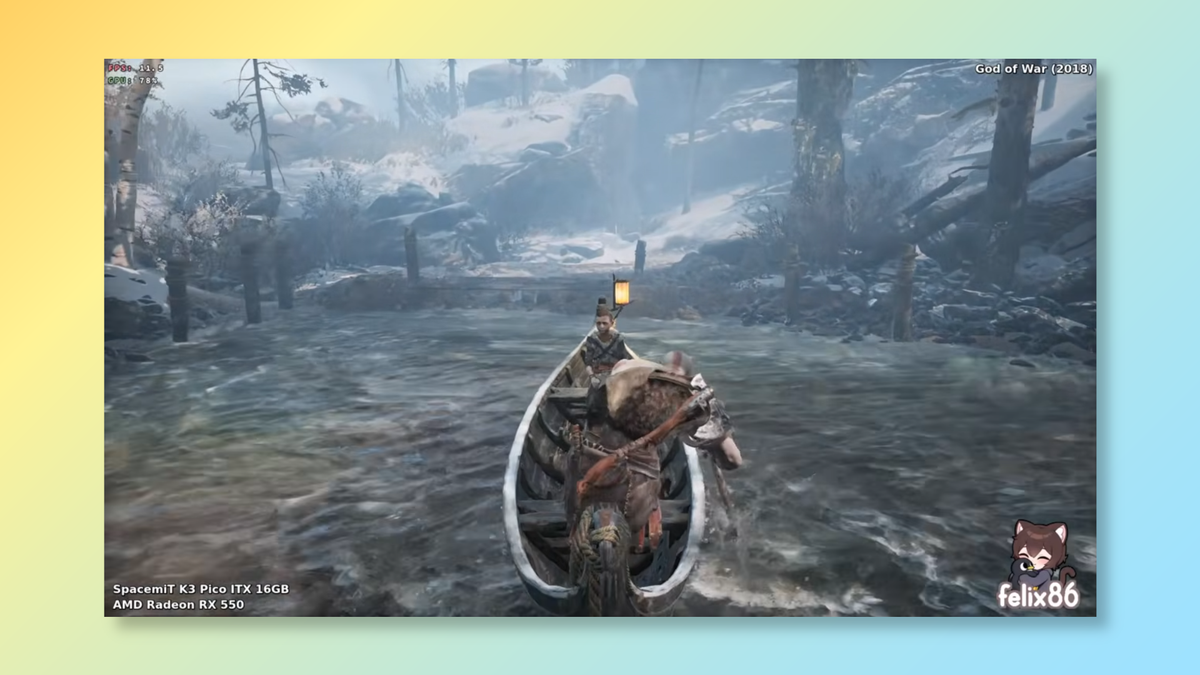
The developers of felix86, an emulator built for RISC-V-based computers to allow the operation of x86 programs, made a blog post today showing off x86 Windows gameplay. The exceptionally good framerate (by RISC-V standards) for 3D games in particular demonstrates progress for truly open source hardware.
RISC-V gameplay on the SpacemiT K3
After a long wait, the felix86 team was able to test its software on the SpacemiT K3, one of the newest chips in the RISC-V arena. It notably uses the RVA23 standard to allow for more powerful open source computing, and which is officially supported by Ubuntu 26.06 LTS.
Below is a series of screen recordings showing gameplay using the K3 along with an AMD Radeon RX 550 graphics card, using the newly-released 26.06 version of felix86. HUD stats in some giving you an idea of what's happening with the hardware.
The blog post notes that, previously, modern 3D games played on the felix86 emulator maxed out at an unplayable 5 frames per second. As you can see, games like God of War (2018) are in solidly playable territory now.
Depending on the game, some of the performance gains are very impressive. The blog post reads:
In most games, performance is up 3-4x compared to the K1. In other games, the performance boost is even bigger. For example, Trackmania Nations Forever would run at 3-4 FPS in the K1, but now runs at ~35 FPS.
The post goes on to describe several of the challenges faced in felix86 26.06's development, including a limitation in 4x PCIE slots, a workaround for playing Cuphead, and some utilization of the K3's dedicated AI cores.
Zooming out
The background: RISC-V architecture, unlike traditional x86 and other processor architecture, is completely open source and has efficiency gains not seen elsewhere.
 Jordan Gloor
Why this announcement matters: Progress toward a stable and capable chip that everyday PC users can rely on has been slow, but further research and development of both chips like the K3 and software like felix86 are inching us closer to that reality.
My take: I've been following felix86 since it arrived on the scene last year, and I'm excited to see its demonstration of daily driver-level action on a RISC-V computer.
Diving in
Go further: Much of the blog post went over my head with its discussion of technical advancements. If you're more knowledgeable, though, check out the full felix86 blog post for more details, and let me know if I missed anything important.
Get it now: If you want to try felix86 on your RISC-V board, you can read the official felix86 documentation, or just try the quickstart installation script:
bash <(curl -fsSL https://install.felix86.com)