I found all the Linux distributions that run on RISC-V
If you're trying to get a running operating system on your RISC-V board, your options include Debian, Ubuntu, Fedora, and more.

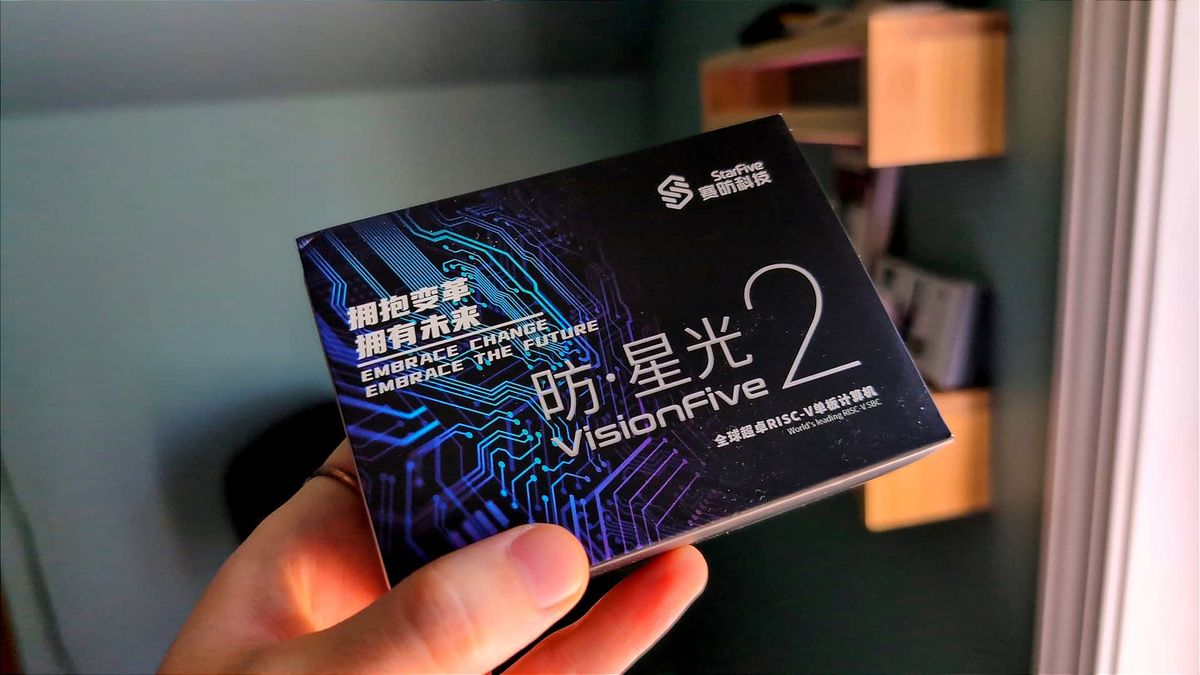
Do you have a RISC-V computer or SBC and want to install Linux on it? These Linux distributions and other open source operating systems offer images designed for the open source architecture you can download right now.
Read this first!
While doing this research to pick a Linux distribution to install on my StarFive VisionFive 2 board, I learned a few important facts. I'm sharing them here to keep you in the know.
Not all boards are consistently supported
While all of these Linux distributions support at least one 64-bit RISC-V processor, many only support specific boards, and none can guarantee support for every RISC-V processor.
Additionally, just because a distro says that it supports RISC-V boards doesn't mean the installation process will be as simple as downloading an image and flashing it to your board. You should check the distro's documentation for device-specific advice, and also review any documentation for your board on installing operating systems.
If you want better support, go RVA23-compliant
In 2026, the latest and greatest RISC-V board were built with the RVA23 profile, and certain distros now require that profile. At the moment, they're rare, but RVA23-compliant devices include the SpacemiT K3 processor, as seen on the Milk-V Jupiter2.
What is RVA23? It's a set of standards that require specific extensions (what you might call "features") to be present and supported in a RISC-V processor. The purpose of the profile is to ensure an operating system will work the same way across various devices.
 Jordan Gloor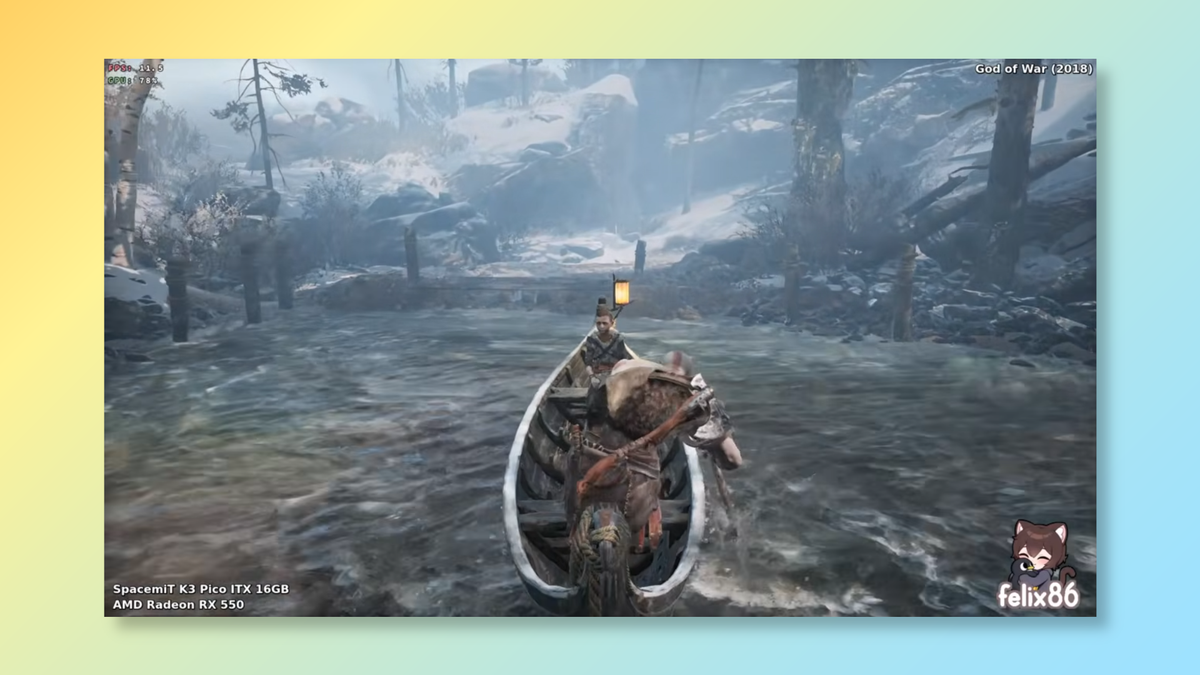
The complete list
Below are all the Linux distributions (and other *nix operating systems) I could find that support RISC-V boards in some form.
Arch Linux
While mainline Arch Linux doesn't support RISC-V, there is an unofficial community "port" supporting a select group of boards. They include the HiFive Unmatched and Unleashed, the PolarFire SoC Icicle Kit, the VisionFive 2, the Milk-V Mars, and the Nezha.
Armbian
Don't let the name fool you; the ARM-focused Debian alternative does in fact support RISC-V boards. The VisionFive 2 is the only one officially supported (at a "Community" support level).
Armbian also offers a generic "UEFI riscv64" image as well. However, I could not find any documentation with advice on its use, which is disappointing given how finicky RISC-V boards can be. I also notice that a lot of Armbian's development lately appears to be LLM-assisted. For that reason, I don't recommend trying the generic image unless you really know what you're doing.
Alpine Linux
Since version 3.20, Alpine Linux has offered RISC-V-compatible images in its Standard and Mini Root Filesystem categories. That means you cannot get the Extended or Netboot images in RISC-V form. No specific models are named, but you can follow the Alpine wiki's guide to installation on the Orange Pi 2.
Alpine Linux, while powerful, is intended for advanced users. If you aren't a command line pro and only plan to use your computer for everyday desktop purposes, I recommend you look for a different distribution.
Batocera
Batocera Linux stands out on this list as a distribution dedicated to retro gaming. You get a console-like experience rather than a desktop, and it automatically scans for ROMs and lets you play them in dozens of emulators. The only officially supported RISC-V device, though, is the StarFive VisionFive2
I've actually used Batocera on my VisionFive 2 before. At the time, it looked like development of Batocera's RISC-V image was falling behind, but that's since changed. The current version, Batocera 43, has a RISC-V image.
Debian
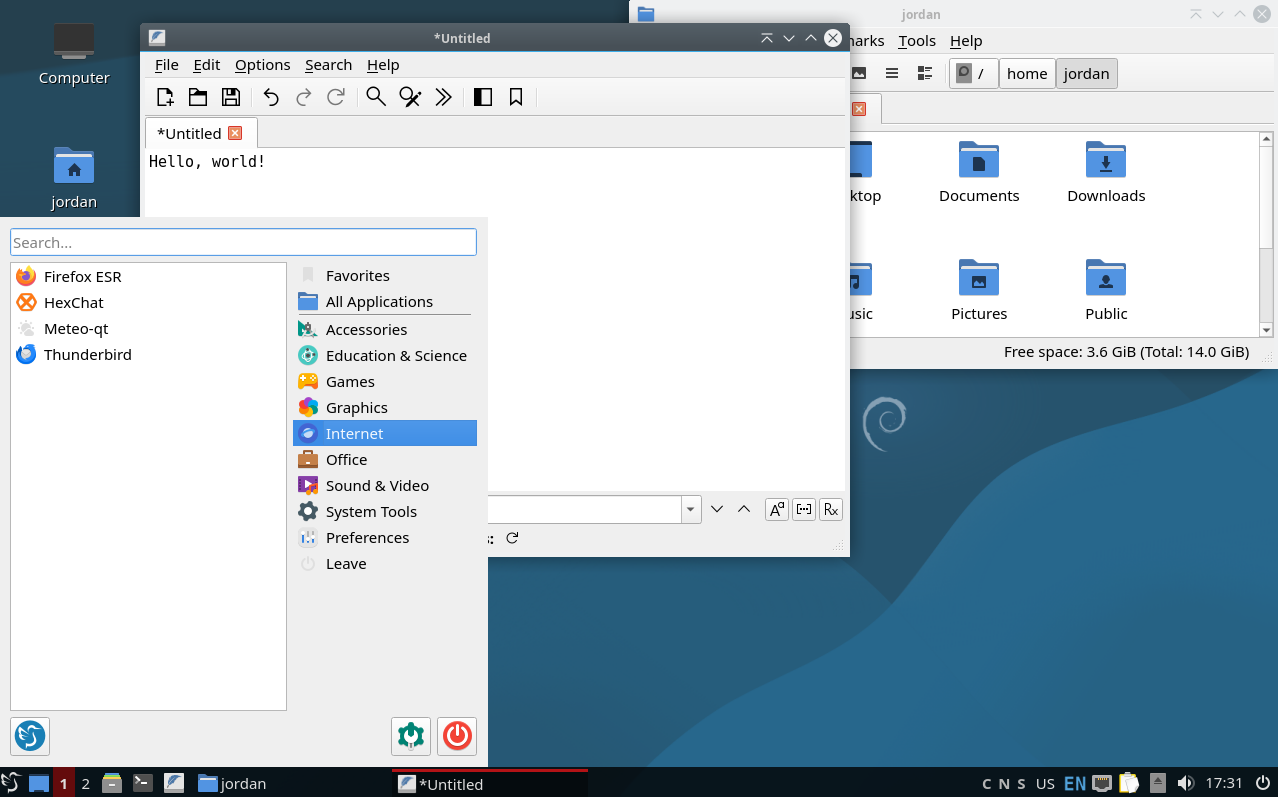
RISC-V got full support starting with Debian 13, also called "Trixie." Several boards are officially supported, including the VisionFive 2, the Lichee RV, the Nezha, and more. You should see Debian's RISC-V documentation for device-specific downloads and guidelines on installation.
DietPi
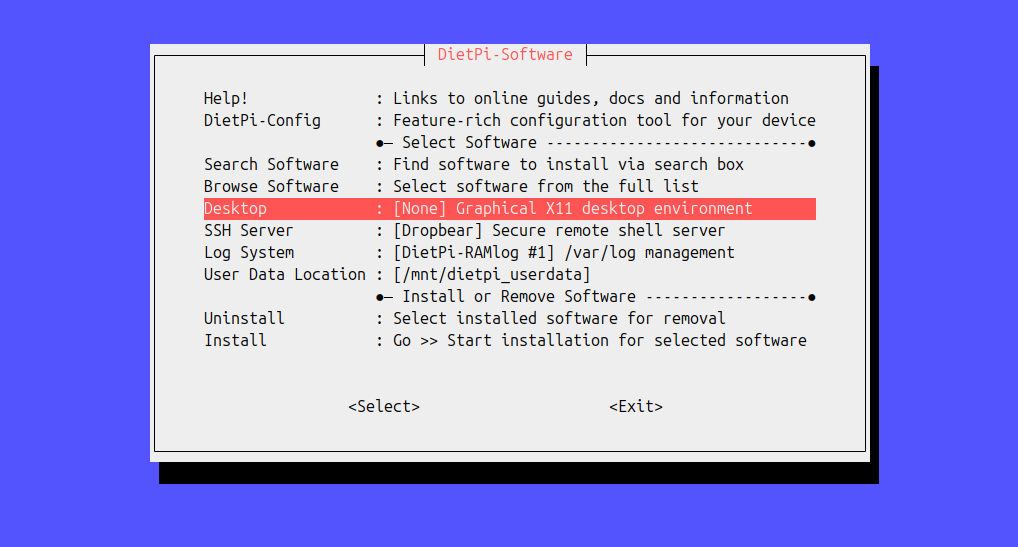
DietPi, like Armbian, is another Linux distribution intended as a replace for Raspberry Pi OS. It supports a wide variety of SBCs, though, including both the StarFive 2 and the Pine64 Star64.
I've personally run a lot of software on DietPi, including with a RISC-V board. I find its software installation scripts really helpful. DietPi's documentation includes a list of software that cannot be installed on its RISC-V image.
Fedora
Fedora Linux produces RISC-V builds only in its Server, Container, and Cloud categories. In other words, you're out of luck if you were hoping to run a Fedora desktop on your RISC-V board. However, several boards are supported, which you can read about in Fedora's RISC-V hardware wiki page.
FreeBSD
FreeBSD offers (as of version 13.0) what it calls "Tier 2" support for RISC-V boards. Its device support varies, with full support for like the MangoPi MQ Pro and Sipeed Lichee RV, and with "in-progress" support for the VisionFive 2 and Pine64 Star64. See the FreeBSD wiki article on RISC-V for details.
OpenBSD
If FreeBSD isn't quite your cup of tea, you can also install OpenBSD on your RISC-V board. Some boards, like the HiFive Unmatched and the Mango Pi MQ-Pro, are officially supported, but you should read the OpenBSD webpage on RISC64 support for the latest information on specific board help.
 Jordan Gloor
openSUSE
While support is currently limited, it is possible to run openSUSE Linux on a RISC-V device. At the moment, VisionFive 2 and HiFive Unmatched boards are fully supported, and a few other boards like the original VisionFive and the Nezha are "in progress." See the openSUSE RISC-V portal for more information.
NetBSD
When NetBSD version 11.0 arrived in July 2026, it brought with it support RISC-V, including the VisionFive 2 and the Pine64 Star64. Like FreeBSD, NetBSD labels its RISC-V support as "Tier II" or "Organic" support, meaning its development isn't prioritized by the core team as much as, say, x86_64 images are prioritized.
In case you're confused by the different BSD options, be aware that NetBSD differs in its emphasis on portability and compliance with standards, while OpenBSD focuses on security. FreeBSD, meanwhile, emphasizes its flexibility as a general purpose operating system. If you're still not sure which to go with, I recommend just trying one and seeing whether or not you like it on your RISC-V computer.
Ubuntu
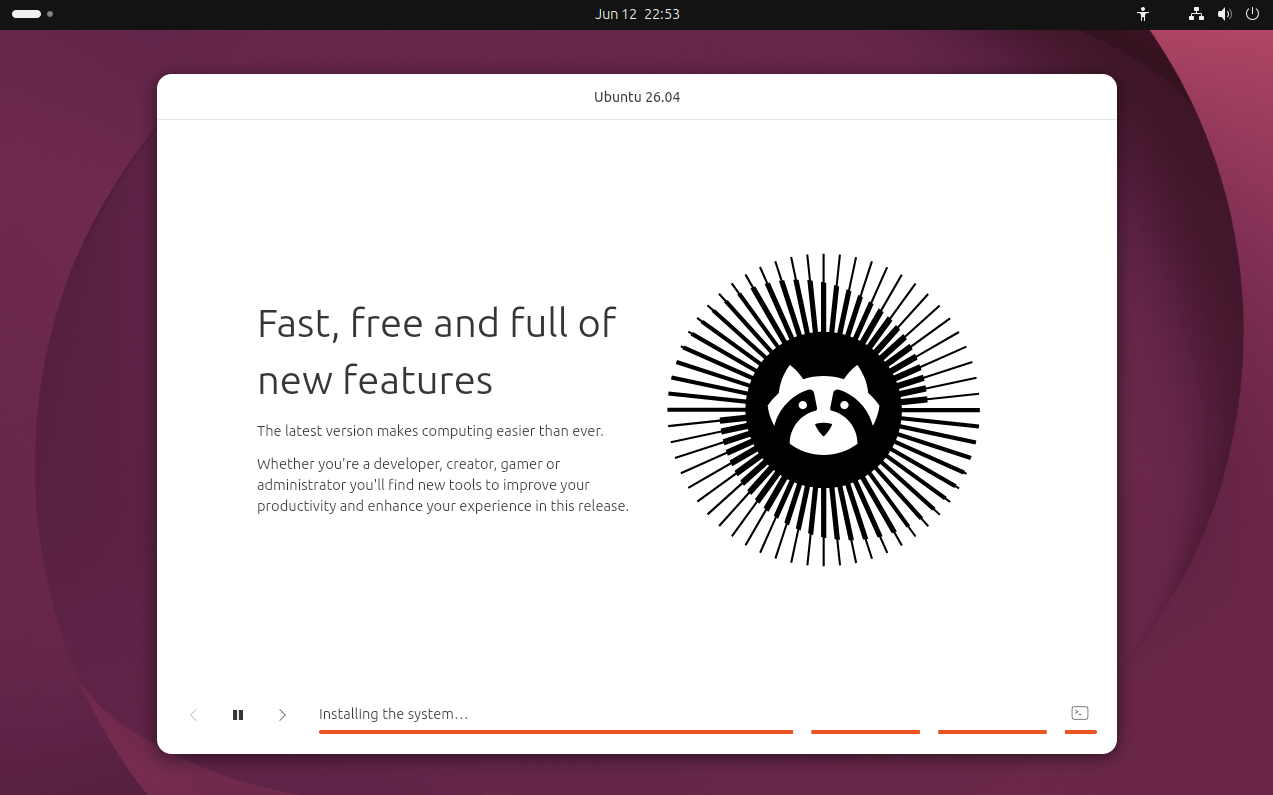
Ubuntu, one of the most popular Linux distributions out there, offers support for RISC-V. Importantly, specific Ubuntu versions support specific RISC-V profiles. Since Ubuntu 25.10, only RVA23 profile processors are supported, such as the SpacemiT K3. This includes Ubuntu 26.04 LTS "Resolute Raccoon."
However, older Ubuntu LTS releases did support pre-RVA23 boards. For example, Ubuntu 24.04 LTS, which is supported until 2036, can be installed on the StarFive 2 and StarFive 2 Lite. Refer to the official Ubuntu SBC installation instructions for board-specific information as well as image downloads.
Those are all the Linux distributions I could find with at least a little bit of RISC-V support. If you find another, or if you discover any helpful tips about specific boards or distributions, let me know about it in the comments.